Digital Hydraulic Pressure Gauge Explained: A UK Buyer's Guide
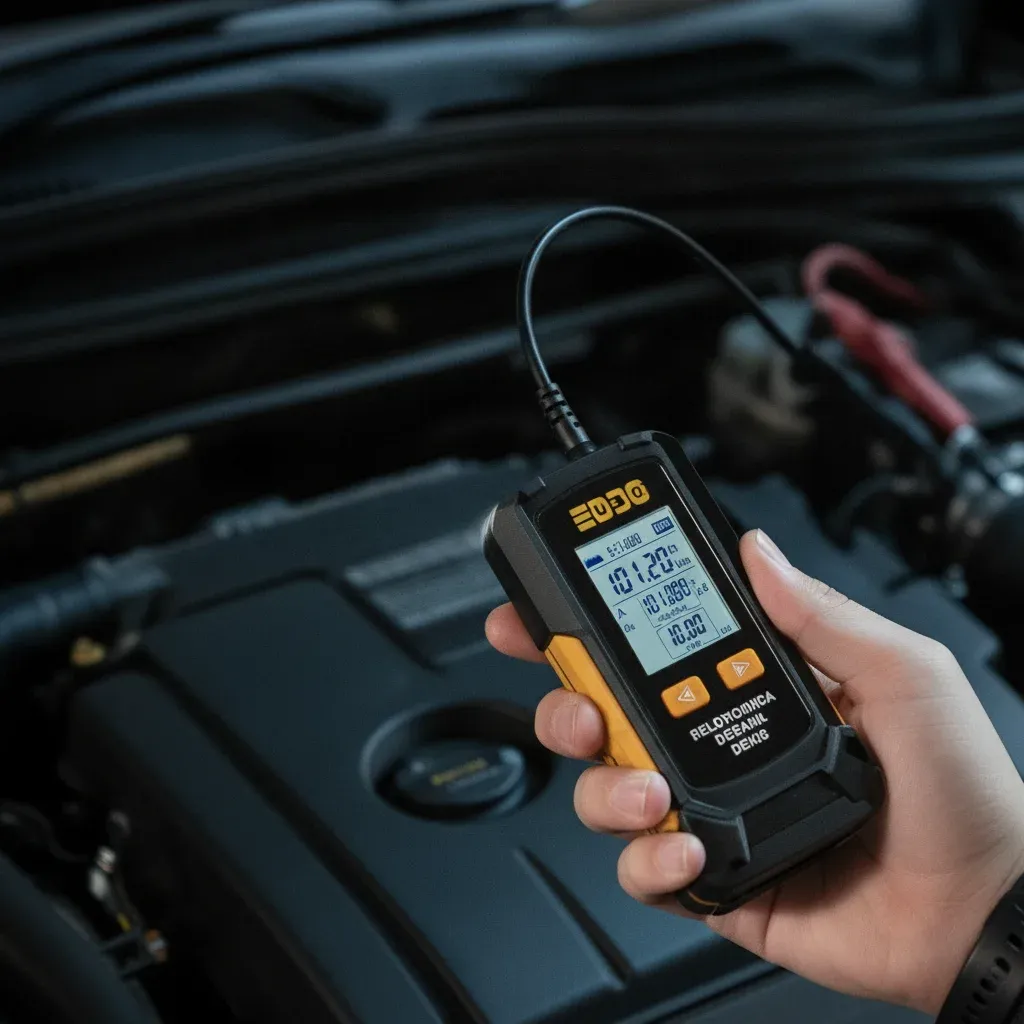
Hydraulic faults are expensive to ignore. A pressure reading that is even slightly off can point to pump wear, blocked filters, internal leakage or a relief valve set outside tolerance. For engineers, maintenance teams and buyers in the UK, choosing the right digital hydraulic pressure gauge is less about buying a display and more about getting dependable diagnostics on site.
At Manompress, the focus is on compact, trade-grade digital pressure testing equipment built for fast, accurate fault-finding. While our hero product is known as the compact digital manometer gas pressure tester, the same principles matter across professional pressure measurement: accuracy, portability, clear readings and confidence in the result.
This guide explains what a digital hydraulic pressure gauge is, how it works, what specifications matter in practice and how UK buyers can choose the right model for workshop, plant and field use.
Key Takeaways
- A digital hydraulic pressure gauge provides an electronic pressure reading for hydraulic systems, usually with improved readability and added functions compared with analogue gauges.
- For UK buyers, the most important checks are pressure range, accuracy class, wetted materials, connection size, ingress protection and calibration support.
- Hydraulic applications often demand higher pressure capability than gas or HVAC testing, so matching the gauge to the system is critical.
- Digital models can help speed up diagnostics by offering peak hold, min/max capture and easier reading in poor light or awkward mounting positions.
- Buying from a specialist supplier matters because specification errors can lead to unsafe readings, premature failure or misleading fault diagnosis.
What is a digital hydraulic pressure gauge?
A digital hydraulic pressure gauge is an electronic instrument used to measure the pressure within a hydraulic system. Instead of relying on a purely mechanical dial and pointer, it uses a sensor to detect pressure and display the value on a digital screen. In practical terms, that means clearer readings, less parallax error and useful functions such as zeroing, unit switching or recording peak values.
These gauges are used across manufacturing, mobile plant, agricultural machinery, maintenance engineering and process industries. In many settings they support faster troubleshooting because engineers can see exact values rather than estimating from a small dial division.
If you want broader background on formats and use cases across the market, see The Ultimate Guide to Digital Pressure Gauges in the UK.
How it differs from an analogue gauge
An analogue hydraulic gauge typically uses a Bourdon tube mechanism that moves a needle across a dial. That design remains common and reliable. A digital model replaces visual needle interpretation with an electronic sensor and numerical readout.
The difference matters when precision is important. A digital display can be easier to read during commissioning or maintenance work where lighting is poor, access is awkward or vibration makes pointer movement harder to interpret. For buyers comparing technologies, our related guide on Bourdon manometers explains where traditional mechanical instruments still make sense.
Why hydraulics need careful instrument selection
Hydraulic systems operate at far higher pressures than low-pressure gas testing or HVAC diagnostics. That means buyers must pay close attention to overpressure rating, process connection quality and compatibility with oils or fluids used in service. A compact tester designed for low-pressure differential work may be excellent in its own role but completely unsuitable for high-pressure hydraulic circuits.
How a digital hydraulic pressure gauge works
The instrument contains a pressure sensor, commonly based on strain gauge or piezoresistive technology. When system pressure acts on the sensing element, the sensor output changes in proportion to that force. Internal electronics convert that signal into a readable value shown on screen.
The user typically connects the gauge through a threaded port or test point adaptor. Once energised and zeroed if required, the instrument displays live system presn units such as bar, psi or MPa. Some models also log high and low values during operation.
Main components
- Pressure sensor: detects applied hydraulic pressure.
- Display: shows measured value clearly in selected units.
- Housing: protects electronics from impact, fluid ingress and workshop conditions.
- Process connection: links the gauge safely to the hydraulic line or test point.
- Power source: usually battery powered for field portability.
- User controls: allow unit change, zeroing and menu navigation.
Functions that improve fault-finding
The best digital gauges do more than show one number. Peak hold can reveal transient spikes. Min/max capture helps track fluctuations during start-up or valve operation. Backlit screens improve visibility inside plant rooms or enclosed machinery spaces. These small practical details often make more difference than headline specifications when engineers are under time pressure.
Where digital hydraulic pressure gauges are used in the UK
The UK market spans heavy industry, utilities, transport depots, facilities maintenance and mobile equipment servicing. Anywhere hydraulic power is used for lifting, clamping, pressing or actuation, there is likely to be a need for accurate pressure measurement.
Industrial maintenance and manufacturing
Factories use hydraulic systems in presses, injection moulding equipment and automated machinery. Maintenance teams rely on gauges during planned inspections as well as urgent breakdown work. Exact readings help confirm whether poor machine performance stems from pump degradation, internal bypassing or mis-set control components.
Agriculture and mobile plant
Agricultural contractors and plant engineers regularly diagnose loaders, excavators, tractors and attachments using test gauges suited to field conditions. Here durability matters almost as much as accuracy because instruments are exposed to vibration, dirt and transport between jobs.
Public sector estates and specialist engineering environments
NHS estates teams and contractors working across hospitals may encounter hydraulic systems within specialist plant or support equipment where maintenance records must be defensible and repeatable. In regulated environments across healthcare, utilities and public infrastructure, documented measurements matter because asset reliability has direct operational consequences.
Differential versus single-point measurement
Some buyers confuse standard hydraulic measurement with differential testing. A conventional digital hydraulic pressure gauge measures system pressure at one point relative to atmosphere unless configured otherwise. Differential instruments compare two points directly. If your application involves filter condition monitoring or airflow diagnostics rather than high-pressure hydraulics, read our guide to differential pressure gauges.
The specifications that matter before you buy
1. Pressure range
This is the first filter when choosing any digital hydraulic pressure gauge. The full-scale range must cover normal operating pressure without placing routine readings at either extreme of the instrument's capacity. If the range is too low you risk overload damage; if it is too high you may lose useful resolution at working levels.
A good rule is to choose a range where typical operating conditions sit comfortably within the middle portion of scale while allowing headroom for surges.
2. Accuracy
Accuracy should be stated clearly by the manufacturer as a percentage of full scale or reading. For troubleshooting proportional valves or verifying relief settings, small deviations may matter greatly. Buyers should look beyond marketing language such as “high precision” and check published tolerances instead.
The UK Health and Safety Executive stresses that work equipment should be maintained so it remains safe and suitable for use under PUWER principles; using instruments with known accuracy supports that standard of care.[1]
3. Overpressure protection
Hydraulic systems can generate spikes during rapid valve movement or dead-heading events. Overpressure capability provides an extra safety margin if transient conditions exceed nominal working values. This does not replace correct sizing but it does improve resilience in demanding service.
4. Wetted materials compatibility
The sensor diaphragm and process connection materials must suit the hydraulic fluid being measured. Mineral oils are common but not universal; some systems use synthetic fluids with different compatibility requirements. Stainless steel construction is often preferred for robustness in industrial environments.
h5. Connection type and thread standard
p>The gauge needs to fit your existing test setup without improvised adaptors that introduce leak risk or error points. In UK industry you may encounter BSP threads alongside other standards depending on machinery origin. Always verify thread form and sealing method before ordering. h6. Display readability
p>A bright screen with large digits sounds simple but makes daily work easier. Readability matters when checking values quickly during service calls or when accessing cramped machinery spaces where viewing angle is poor. h7. IP rating and build quality
p>If the instrument will be used outdoors or around washdown areas, ingress protection becomes important. Dusty workshops and wet sites can shorten product life if housing quality is weak. Portable trade-grade devices should feel robust enough for repeated handling rather than occasional bench use only. h8. Calibration support
No buyer wants uncertainty over whether readings remain reliable after months of use. Ask whether calibration certificates are available at purchase and whether recalibration support exists in the UK afterwards. That matters especially for contractors who need traceable records for clients or audits. p>If you are still comparing core specification terms across categories, our broader reference article, < a href="/blog/the-ultimate-guide-to-digital-pressure-gauges-in-the-uk/">The Ultimate Guide to Digital Pressure Gauges in the UK, sets out what these figures mean in plain English.
>Start with your application rather than brand alone. A compact handheld device might be perfect for service engineers moving between sites. A panel-mounted indicator will suit fixed installations better. A workshop reference instrument may prioritise calibration traceability over portability.<
> <- >
<
- >What is my normal operating range and worst-case spike?<</LI>> <
- >Do I need live monitoring only, or also peak/min/max capture?<</LI>> <
- >What thread connection do my test ports use?<</LI>> <
- >Will this instrument be used indoors, outdoors, or both?<</LI>> <
- >Do I need calibration certification at purchase?<</LI>> <
- >Who will use it: trained engineers only, or mixed teams who benefit from simpler displays?<</LI>>
<</OL>>
<
>Check supplier credibility< > <>For technical instruments, the supplier matters almost as much as the specification sheet. Look for clear published details, UK-based support where possible, and product descriptions written by people who understand trade use rather than generic catalogue fillers. That reduces the chance of buying an unsuitable gauge based on vague wording.<
> <>Think beyond initial price< > <>A cheaper unit that fails early, lacks calibration backing or gives unreliable readings quickly becomes poor value. Total ownership cost includes battery life, serviceability, recalibration options and time saved during troubleshooting.<
> <>For buyers comparing categories before shortlisting products, The Ultimate Guide to Digital Pressure Gauges in the UK is a useful next step.<
>
A careful brief before purchase avoids most of these issues. That brief should cover operating range,&nature of fluid,\u00A0required features,\u00A0site conditions\u00A0and documentation needs.\t\t<\/P>\n<\/SECTION>\n\n If you need reliable,\ntrade-grade equipment built around fast,\naccurate diagnostics,\nManompress offers compact digital testers designed for real-world engineering use.\nFor gas \nand HVAC specialists,\nour dual-port differential solution delivers clear readings,\nportable handling \nand practical usability on site.\n<\/P>\n Read The Ultimate Guide to Digital Pressure Gauges in the UK<\/a> It measures fluid pressure within a hydraulic system using an electronic sensor \nand displays that value digitally.\nDepending on model,\nit may also show peak,\nminimum \nor maximum readings.\n<\/P>\n\n \
It\
can\
be,\
especially\
for\
reading\
and\
interpretation,\
because\
there\
is\
no\
needle-estimation\
error.\
Actual\
performance\
depends\
on\
the\
instrument's\
specified\
accuracy,\
quality\
of\
sensor\
and\
calibration\
status.\
<\/P>\n\n No.\
Hydraulic\
systems\
often\
run\
at\
much\
higher\
pressures\
than\
gas\
or\
HVAC\
applications.\tYou must choose an instrument specifically rated for hydraulic pressures,\twith compatible materials \tand correct connections.\t<\/P>\n\n \
Ask\
for\
the\
full-scale\
range,\
accuracy,\
overpressure\
rating,\
wetted-materials\
specification,\
connection-thread details,\
IP rating \nand availability of calibration certification or recalibration support within the UK.\t<\/P>\n\n [1] Health \u0026 Safety Executive (HSE), guidance relating to maintenance of work equipment under PUWER principles: hse.gov.uk\nFind\nthe\nright\ncompact\ndigital\npressure\ntester\nfor\nprofessional\nwork\n<\/H2>\n
Frequently Asked Questions<\/h2>\n\n
What does a digital hydraulic pressure gauge measure?<\/h3>\n
\
Is\na\ndigital\
hydraulic\
pressure\
gauge\
more\
accurate\
than\
an\
analogue\
gauge?<\/H3>\n
[2] Siemens,\t“True Cost of Downtime” research summary,\treporting estimated impact of unplanned downtime across major manufacturers: siemens.com<\/small>
Ready to upgrade your toolkit with Manompress?
Shop Now — £48.73